Threshold CEO John-Mark McCafferty

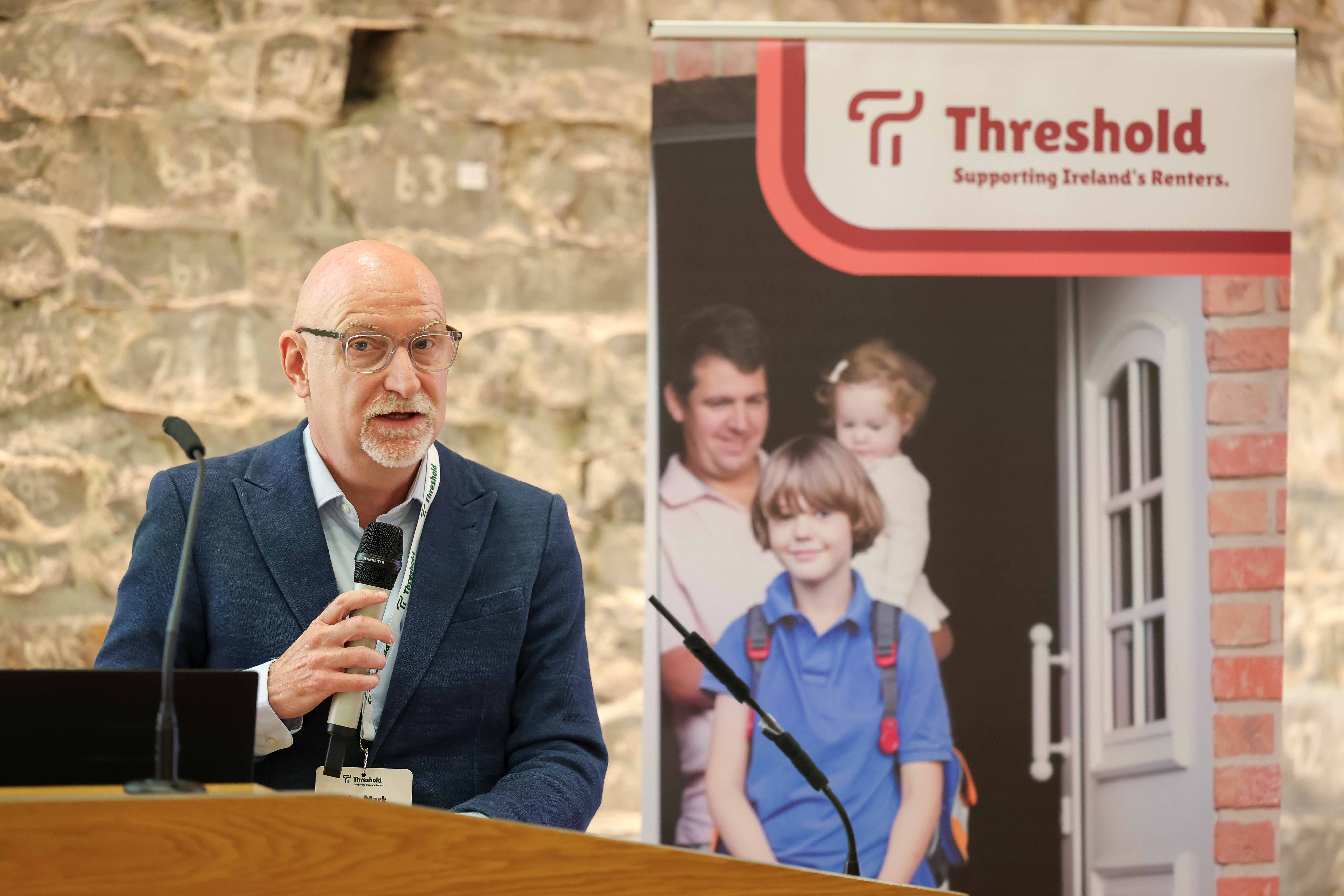
Threshold CEO John-Mark McCafferty

Threshold CEO John-Mark McCafferty
The Government has committed to developing a National Homelessness Prevention Framework, bringing together universal, upstream, crisis, emergency and repeat prevention measures. Threshold welcomes this commitment and is using today’s conference to highlight the importance of placing systems thinking at the centre of the Framework.
A systems thinking approach recognises that homelessness is driven by multiple, interconnected factors and therefore requires coordinated action across public and community services. Threshold’s new conference paper, Joining the Dots: Systems Thinking for Homelessness Prevention, is also being published today. The paper examines how a systems thinking approach can support earlier intervention and sets out what Threshold believes should be prioritised in the development and delivery of the Framework.
Minister for Housing, Local Government and Heritage, James Browne TD, said:
"The response to homelessness must focus on prevention as much as intervention. By improving early warning systems, helping people remain in their homes and strengthening collaboration across housing, health and social services, we can reduce the risk of homelessness and deliver better outcomes for those most vulnerable.
“As we develop and implement the National Homelessness Prevention Framework, these principles of early intervention, prevention and coordinated support will be central to our approach, helping us deliver better outcomes for those at risk of homelessness."
Coordinated action across Government and public services
Threshold is highlighting the need for Government departments, State agencies, local authorities, social welfare services, schools, community organisations and other stakeholders to work together to identify risks and support households as early as possible and before they reach crisis point.
Ann-Marie O’Reilly, National Advocacy Manager at Threshold, said:
“Too often, support only becomes available once a household is already facing the loss of their home. By that stage, the options available to people can be significantly reduced and the consequences can be far-reaching.
“Prevention means acting while there is still an opportunity to help someone keep their home. This requires us to recognise the warning signs of housing instability and ensure people can access meaningful support before their situation becomes a crisis.
“We have an opportunity through the National Homelessness Prevention Framework to change the way we approach homelessness in Ireland - by focusing not just on what happens when someone becomes homeless, but on early, targeted action to prevent it from happening in the first place.”
Properly resourcing homeless prevention
Ireland’s current approach remains heavily focused on responding to homelessness once it has already occurred. In 2024, 85.7% of expenditure on homelessness went towards emergency accommodation, while just 4.3% went towards homelessness prevention, tenancy sustainment and resettlement support.
Threshold is calling for the National Homelessness Prevention Framework to be fully resourced so that preventative measures can be introduced, delivered effectively and sustained over time. Greater investment can enable earlier intervention, strengthen tenancy sustainment services and reduce reliance on emergency accommodation. This reduces costs to the Exchequer and saves people and communities from the damage caused by homelessness. Budget 2027 provides an opportunity for each Government Department to appropriately assign resources to their homelessness prevention measures.
The Framework should also include clear measures to evaluate what works, track outcomes and allow prevention approaches to be adapted as evidence and circumstances evolve.
Prioritising universal and upstream prevention
Threshold is also calling for greater emphasis on ‘upstream’ measures that reduce housing instability generally and identify people at risk of homelessness at the earliest possible stage.
‘Universal’ measures address the wider conditions that contribute to housing instability, including the security, affordability and availability of housing. ‘Upstream’ measures identify people at greater risk of homelessness and provide appropriate support before they reach crisis point.
Conference keynote speaker Dr Lígia Teixeira, CEO of the Centre for Homelessness Impact, said:
“The development of a National Homelessness Prevention Framework is a very positive opportunity for Ireland, but it will be important not to treat all prevention as the same. Supporting people at the point of crisis is essential, but if most of our effort continues to sit there, we risk becoming better at responding without necessarily reducing the number of people becoming homeless.
The opportunity now is to use evidence to be much more deliberate about where action can make the greatest difference and then make sure those choices can actually be delivered. That means investing not only in interventions, but also in the infrastructure around them, including the data, implementation support, local capability and learning systems that help us put good ideas into practice, see whether they are working and improve them over time. That is how Ireland can turn a strong prevention framework into better outcomes for people.”
September 9, 2026